

Micheal Martin
NEW FOREIGN minister Helen McEntee must be embarrassed at having to suddenly retreat from her initial boast that the Occupied Territories Bill (OTB) would be one of the very first things she addressed in her new post. Being a former junior foreign minister, she ought to have known that her Iveagh House department has for nearly eight long years strung along the Palestinians and a most supportive Irish public with false pledges to enact the OTB. She knows this if only because she was at one stage a part of that cruel con trick.
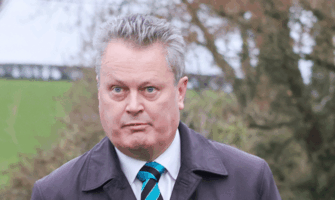
When senator Frances Black initially moved the bill in the Seanad in January 2018, she confronted an argument that has been used for most of the eight years since then, namely that EU law forbade trade restrictions by an individual member state. Black’s legal experts and supporters, including former attorney general Michael McDowell, were of world-class stature but the Fine Gael government and its then foreign minister, Simon Coveney, dismissed and even derided them.

Coveney also argued that Ireland should not act alone in any case, that it was better to act in unison with the EU and also that “Prime Minister Netanyahu has told me he is committed to negotiations. I believe him.” Seriously? Was that naïve or simply duplicitous?
Fianna Fáil was then in opposition, although supporting government under the confidence and supply arrangement. It backed Black’s bill but agreed to give the government six months for Coveney to implement his diplomacy strategy.
When the bill returned to the Seanad in July 2018, Coveney spent two hours beforehand closeted with Black in an effort to dissuade her from calling a vote (he feared “diplomatic blowback”) but she refused his request. The bill was passed, in full, for the third time in the Seanad in December 2018.
In that debate McEntee opposed the bill, stating: “The essential purpose of the bill is contrary to EU law and requires the state to do something which is not in its power.”
She also argued that Irish business in the US would be damaged; that our diplomatic stature would be diminished; and that, in any case, the bill would not be effective.
When the bill went to the Dáil in January 2019, with FF now moving it, Coveney ramped up the financial blackmail threat, saying that the consequent breach of EU trade law would result in fines of “up to tens of millions of euros per year” and he also repeated the financial threats to “US companies in Ireland and Irish companies in the US”.
In his closing speech moving the motion, FF’s Niall Collins said: “While we value the jobs that corporate America brings… we cannot give it a free pass on everything simply because it provides us with jobs.”
The Dáil overwhelmingly passed the OTB but its democratic passage was a mere irritant to the FG government, which deployed the arcane “money message” tactic to freeze the bill. This relied on Article 17.2 of the constitution, which says opposition bills cannot spend government money.
The next chapter in pro-Palestinian rhetoric combined with anti-Palestinian sabotage of the OTB came with the programme for government negotiations involving FG, FF and the Green Party following the 2020 general election. The latter two parties had included support for the OTB in their manifestos but FG had not and resisted its inclusion when the Greens pushed for it. When Green negotiator Neasa Hourigan was asked what happened to the bill, she replied: “Simon Coveney happened.” FF remained mute throughout the process.
From 2020 to 2023 little happened, with the FFG/Green government refusing to act, despite the votes in both houses. Then came Gaza, October 2023, Israel’s genocide of Palestinians and the International Court of Justice (ICJ) ruling in 2024. The government’s amateur legality and delaying tactics were turned upside down and inside out by the ICJ ruling, which not only enabled states to bar trade with the occupied territories but obliged them to end all such trade.
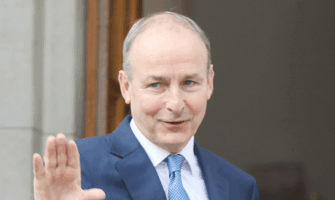
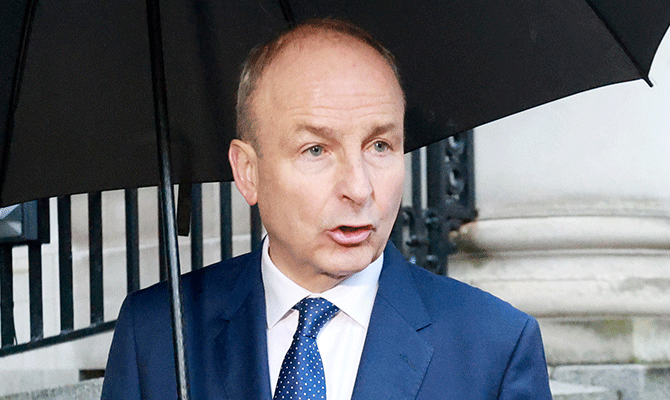
In the 2024 general election both FF and FG declared their intention to pass the OTB and Martin went before the Oireachtas foreign affairs committee to say that he would pass the bill “straight away” after the election. What he actually did was to suddenly raise the hitherto unnoticed ‘problem’ of the bill blocking ‘services’ as well as goods from the occupied territories.
Martin and Harris have synchronised their statements this year about political sympathy for the bill, qualified – with heavy heart and pained reluctance – with concerns about its legality when it comes to services. Europe minister Thomas Byrne reinforced this legal caution last month.
Next month sees the eighth anniversary of efforts to pass the OTB, which has received democratic endorsement and validity at various levels in that time. Behind the mock statements of support from government politicians lurks the US ambassador and threats from America about the damage to Irish business that the bill will provoke.
Must we wait another decade or so?